
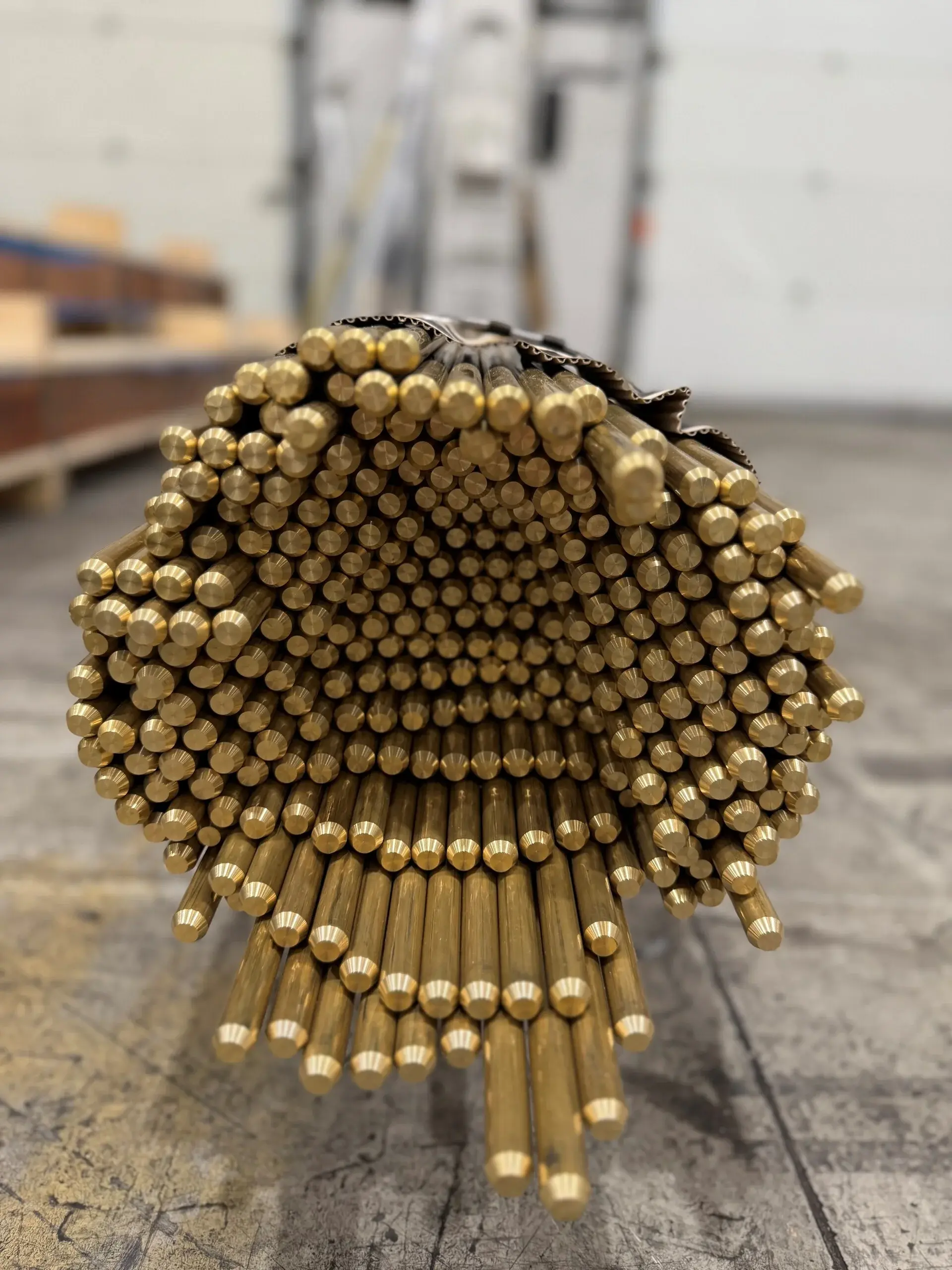
Brass can look simple on a quote, but the grade you choose affects corrosion resistance, machinability, finish quality, and how reliably your parts fit together. Whether you are buying brass sheet metal for a formed cover, brass rod for turned components, or brass fittings for assemblies, a small change in grade can make a big difference.
In this guide, we will keep it practical. You will learn how to link what your part needs to do (and where it will live) to the most suitable properties, so you can avoid common issues such as cracking during forming, early corrosion, or finishes that vary from batch to batch.
At ILF, we supply brass, copper and aluminium as UK stockholders and manufacture busbars to specification. We also provide CNC machining and finishing, helping customers secure a dependable supply with clear specification control.
What Is Brass, and How Is It Made?
Brass is a metal that primarily consists of copper and zinc. Manufacturers make specific brass alloys with varied strengths, corrosion resistance, and forming or machining ability by changing the proportion of zinc and adding minor amounts of other elements.
The grade you choose affects:
- how easily it machines and whether it produces clean edges
- how well it bends or forms without splitting
- how it behaves in damp, coastal, or chemically exposed environments
- how consistent the final colour and finish will look across parts
Typical Uses of Brass in Engineering for Busbars
Brass works well in busbar engineering because it combines strength, decent conductivity, and easy machining.
Engineers use brass busbars when they need a rigid, durable connection that can handle mechanical stress. Copper and aluminium conduct electricity better, so engineers use them more often. Brass handles harsher conditions, so engineers choose it when they need higher strength and better corrosion resistance.
- Key characteristics: Brass carries less current than copper or aluminium at the same size, so engineers often specify a larger cross-sectional area to achieve the required load.
- Applications: Brass is used in electrical panels, grounding bars, and marine or coastal environments where corrosion resistance is important.
- Advantages: Brass stays strong, holds up well over time, and is easier to tap and thread than softer copper.
- Use cases: Brass suits installations with vibration, movement, or high tightening torque on fasteners, where the busbar must stay stable and secure.
This mix of practical performance and neat appearance is why many UK industries keep reliable brass suppliers and stockholders on hand to ensure consistent material quality.
Factors to Consider When Choosing a Brass Grade
Before selecting a brass grade, consider how it will be used and what the service environment demands. Key factors include:
- Machinability: If your project involves detailed turning or milling, a free‑machining brass, such as CZ121, reduces tool wear and shortens production time.
- Corrosion Resistance: For marine or outdoor use, a seawater‑resistant brass with tin (like naval brass) is better suited to withstand moisture and salt.
- Formability: If the component needs to be bent, drawn, or spun, choose a ductile brass such as CZ108, which can be shaped without cracking.
- Strength and wear resistance: For load-bearing or mechanical joints, stronger alpha‑beta brasses are typically preferable.
- Finish and appearance: For decorative use, choose a brass that takes uniform polishing or coating well to deliver a consistent surface finish.
Assessing these factors early helps you avoid material failures, rework, and cost overruns later.
Overview of Popular Brass Grades and Their Properties
Below are some common grades used by engineers and fabricators across the UK:
- CZ108 (CuZn37): Excellent for cold forming and joining. Common for presswork, deep drawing, and heat exchanger parts.
- CZ121 (CuZn39Pb3): Free‑machining brass with added lead for high-speed CNC machining of precision brass components or fittings.
- CZ112 (Naval Brass): Contains tin for superior strength and corrosion resistance in marine environments.
- CZ126 (Leaded Muntz Metal): Suitable for hot forming processes and architectural features that require strong, resilient brass sheet metal.
- High Tensile Brass (CZ114): Maintains strength and resistance to wear, often chosen for engineering parts and fasteners.
Each brass alloy balances workability, durability, and finish based on where and how you use it.
How to Match the Brass Grade to Your Specific Project
Here’s a simple way to narrow down options:
- Machined Components: Choose CZ121 for high productivity on lathes and CNC machines.
- Decorative Sheet Work: Go with CZ108 for smooth finishes on brass sheets and architectural panels.
- Outdoor or Marine Use: Favour CZ112 or nickel brass types for enhanced corrosion resistance.
- Load‑bearing Assemblies: Select a tougher grade like CZ114 where wear and pressure are factors.
If you’re comparing types, a quick brass comparison chart can clarify which mechanical and visual traits align best with your project requirements.
Tips for Sourcing Quality Brass Materials
Having the right grade is only half the job; sourcing from reliable brass suppliers ensures quality and continuity. At ILF, we focus on:
- Specification control: Every supply follows defined tolerances, chemistries, and traceability under ISO 9001:2015.
- Consistent availability: As established brass stockholders, we hold a wide range of brass rods, angles, and sheet materials ready for dispatch across the UK.
- Technical guidance: Our team helps match alloy choice to your operating conditions or manufacturing route.
- Finishing precision: Optional CNC machining and linishing support provide clean, accurate surfaces ready for assembly or polishing.
Working with a trusted supplier reduces the risk of inconsistent batches, poor formability, or rework delays.
Key Takeaways on Selecting the Right Brass Grade
To choose the best brass grade, match the metal to the correct format rod, sheet, angle, or another form based on how you will use it and finish it. Before you place an order, consider mechanical strength, corrosion protection, and appearance.
When you need consistent results, a reliable brass supplier like ILF can help you weigh your options and provide the exact brass metal specification you need.
If you’re not sure what grade or style you need, just tell us what you’re looking for, and we’ll help you find it.
Milly Edwards

Sales and Marketing Executive: Responsible for creating content for ILF's social media channels, website, print media and promotional work.